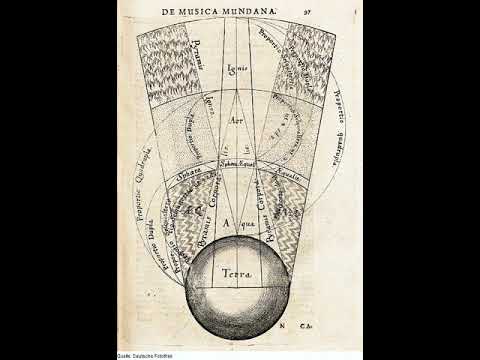
This is an audio version of the Wikipedia Article: https://en.wikipedia.org/wiki/Classic... 00:02:18 1 Ancient times 00:03:08 1.1 Cosmic elements in Babylonia 00:03:43 1.2 India 00:03:51 1.2.1 Hinduism 00:05:09 1.2.2 Buddhism 00:06:43 1.3 China 00:09:53 1.4 Greece 00:14:35 1.5 Tibet 00:17:14 2 Medieval 00:17:22 2.1 Alchemy 00:18:45 2.2 Islamic 00:19:06 2.3 Japan 00:19:57 3 Western astrology 00:20:29 4 Modern 00:21:13 5 See also Listening is a more natural way of learning, when compared to reading. Written language only began at around 3200 BC, but spoken language has existed long ago. Learning by listening is a great way to: - increases imagination and understanding - improves your listening skills - improves your own spoken accent - learn while on the move - reduce eye strain Now learn the vast amount of general knowledge available on Wikipedia through audio (audio article). You could even learn subconsciously by playing the audio while you are sleeping! If you are planning to listen a lot, you could try using a bone conduction headphone, or a standard speaker instead of an earphone. Listen on Google Assistant through Extra Audio: https://assistant.google.com/services... Other Wikipedia audio articles at: https://www.youtube.com/results?searc... Upload your own Wikipedia articles through: https://github.com/nodef/wikipedia-tts Speaking Rate: 0.9186347199108403 Voice name: en-AU-Wavenet-C "I cannot teach anybody anything, I can only make them think." - Socrates SUMMARY ======= Classical elements typically refer to the concepts in ancient Greece of earth, water, air, fire, and aether, which were proposed to explain the nature and complexity of all matter in terms of simpler substances. Ancient cultures in Babylonia, Japan, Tibet, and India had similar lists, sometimes referring in local languages to "air" as "wind" and the fifth element as "void". The Chinese Wu Xing system lists Wood (木 mù), Fire (火 huǒ), Earth (土 tǔ), Metal (金 jīn), and Water (水 shuǐ), though these are described more as energies or transitions rather than as types of material. These different cultures and even individual philosophers had widely varying explanations concerning their attributes and how they related to observable phenomena as well as cosmology. Sometimes these theories overlapped with mythology and were personified in deities. Some of these interpretations included atomism (the idea of very small, indivisible portions of matter) but other interpretations considered the elements to be divisible into infinitely small pieces without changing their nature. While the classification of the material world in ancient Indian, Hellenistic Egypt, and ancient Greece into Air, Earth, Fire and Water was more philosophical, during the Islamic Golden Age medieval middle eastern scientists used practical, experimental observation to classify materials. In Europe, the Ancient Greek system of Aristotle evolved slightly into the medieval system, which for the first time in Europe became subject to experimental verification in the 1600s, during the Scientific Revolution. Modern science does not support the classical elements as the material basis of the physical world. Atomic theory classifies atoms into more than a hundred chemical elements such as oxygen, iron, and mercury. These elements form chemical compounds and mixtures, and under different temperatures and pressures, these substances can adopt different states of matter. The most commonly observed states of solid, liquid, gas, and plasma share many attributes with the classical elements of earth, water, air, and fire, respectively, but these states are due to similar behavior of different types of atoms at similar energy levels, and not due to containing a certain type of atom or a certain type of substance.
Four element theory | Wikipedia audio article - YouTube |
| 0 Likes | 0 Dislikes |
| 12 views views | 283 followers |
| Education Creative Commons Attribution licence (reuse allowed) | Upload TimePublished on 30 Dec 2018 |


Không có nhận xét nào:
Đăng nhận xét